Author: Toby Lewkowicz

A Long-Overdue Update

Hello! It’s been just about six years since I last found myself on this blog. I had all but forgotten about it until I got a surprising email from a homeschool teacher. She and her students have been learning about gender identity, and found this blog as a resource! Through their research, they’ve found a few more sites to add to our Resources page.

A Nurse’s Complete Guide to Gender Affirming Care is an informative page giving an overview of healthcare best practices for transgender patients. Its target audience is medical providers with little to no prior knowledge around the trans experience, but the information is written accessibly. The page also has several handy follow-up resources for further learning.

The Evolution of LGBTQIA+ Narratives on Broadway is an article describing the history of queer representation in theatre. This short but thorough article details the ways that LGBTQ+ themes have shown up on stage throughout history. It’s thoroughly cited, allowing readers to learn further about any elements that particularly interest them.

Thank you SO much to Ms. Miller, Olivia, and their whole class. When I made this blog as my senior work in college, you were the exact sort of people I was hoping to reach. Keep learning – you are going to change the world!

As for me – well, I’m currently sitting on my sofa in Boston with my younger cat, Sylvie, sleeping on my lap. My older cat, Goblin, is snoozing on my bed in the other room. In a few hours I’ll head out to my after school program job – the very same one I had just gotten the last time I updated! Now, though, I’m a confident lead teacher instead of an anxious newbie. I’ve been on testosterone for five years, and my receding hairline seems to have gone directly to my new beard. I’m happy, and surrounded by love – I hope you are too.

Lots of love,
Toby

A picture of the author, a white transgender bearded man wearing a baseball cap, glasses, and a coat.

An Update!

Hey folks! It’s been a while! This summer has been a time of change, growth, and adventure. Now, I’m working as an extended day teacher for K/1 students in Brookline, MA. Life after Bennington has been pretty fantastic so far – to anyone who’s still at school, hang in there!

I did something incredibly exciting today – I got a library card! The Boston Public Library is amazing. Not only can you request books from any of their many branches, but you can also rent books digitally. I’m preparing to do some pretty hardcore reading.

Although I’m done with my senior work, my passion for trans youth literature is still as tremendous as always. As I start to really settle in to my new life, I hope to continue updating this website with new reviews! I don’t want to promise too much, but my reading list has gotten pretty long, and I can’t wait to share it.

Lots of love,
Toby

“George” by Alex Gino

Melissa wants nothing more than to play Charlotte in her 4th grade class’s production of Charlotte’s Web. She has plenty of passion for the character and acting abilities to spare. The only problem? Everyone thinks she’s a boy named George. With the help of her best friend Kelly and the wisdom of a certain spider, Melissa strives for the understanding of her family and community.

The cover of “George”

Alex Gino, the author of George, beautifully captures a young transgender experience. They (Alex is nonbinary and uses they/them pronouns) weave a story that is not only relatable to transgender readers but also anyone who has struggled to find themselves.

Along with Lily and Dunkin, George is one of the two books in this project that deals most directly with transgender issues and identities. Of the two, I would say that George best suits younger audiences, and would make a great classroom read-aloud. While the novel of course addresses serious issues, it does so in a way that feels more approachable and less scary to younger readers. The story is focused more on the experiences of Melissa, rather than on the concept of transgender people at large. This builds more direct empathy rather than feeling political.

In George, the word “transgender” is hardly used, but is always used effectively. When Melissa is talking with Kelly about being transgender, Melissa recalls reading on the internet about “transgender people being treated unfairly,” (Gino, 105). Older readers especially are hit by the way that, even at ten years old, Melissa is beginning to understand that she is living in a world not built for her.

I would recommend this book especially to classroom teachers looking to increase diversity in their read-alouds. The book even features a discussion question and Q&A with the author at the end. Additionally, this book can help give gender divergent children the language and confidence they need to express themselves and be free.

“Lily and Dunkin” by Donna Gephart

This review is going to be a bit different than the others, because Lily and Dunkin is one of the most important books I’ve read in my life. My elevator pitch is as follows:

Lily is transgender. Dunkin is bipolar. It’s the summer before eight grade.

I first read Lily and Dunkin because I was invited to talk about it with a fifth grade class in the school I was working at. They had just finished the book, and their teachers asked me to come do a Q&A about my experience as a transgender person. I had never heard of the book, but I did know the students, and I wanted to be able to give them a meaningful conversation.

When I finished the book for the first time, it was 10:30 at night. Tears were streaming down my face. I put down the book and called my parents. This caused them to be a bit worried, because from their perspective, they got a late-night call from their sobbing son telling them how much he loved them. They understood, though.

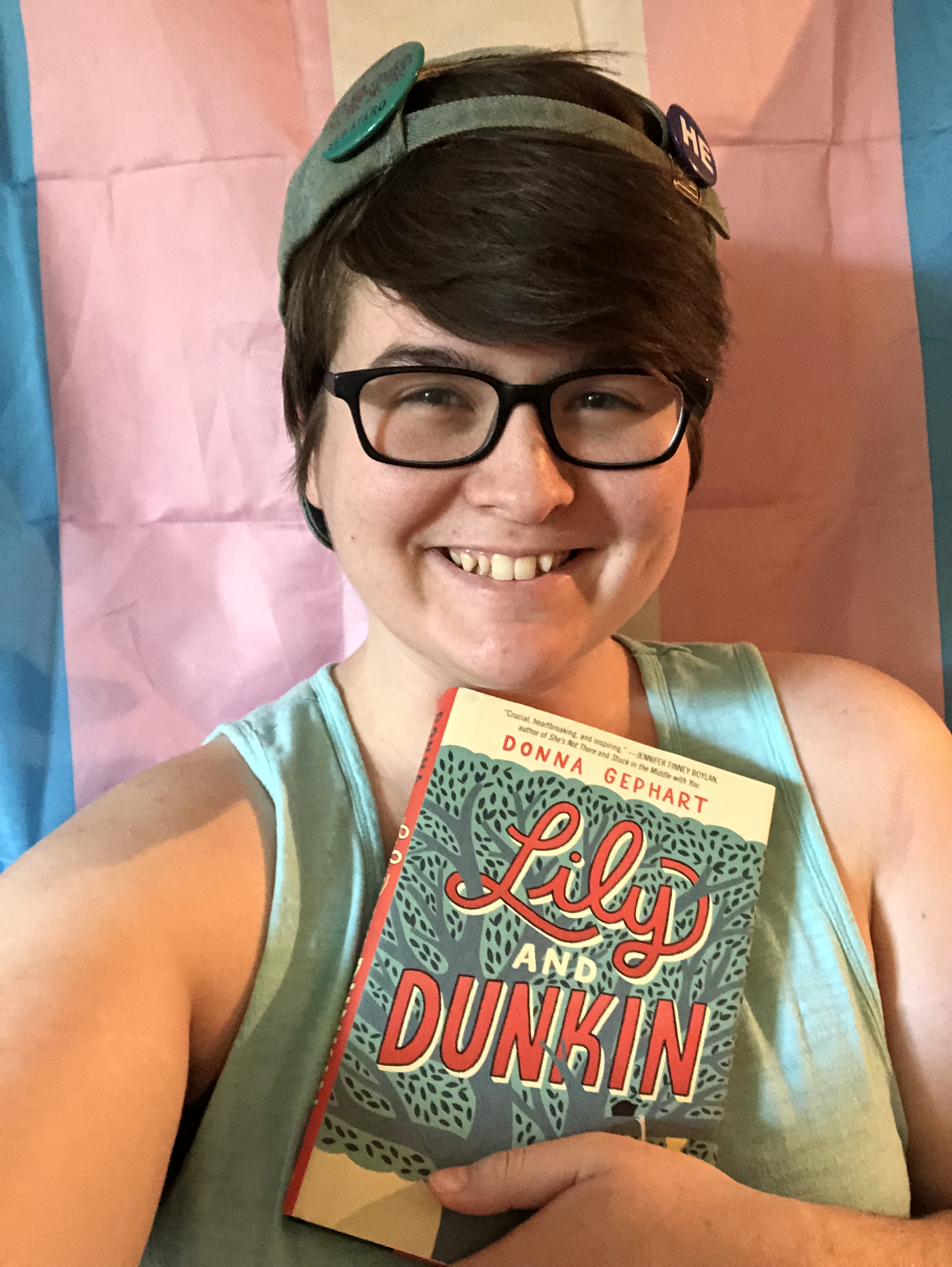
My favorite book & I, in front of my transgender flag

This book makes me cry every single time I read it. Not because it’s sad – completely the opposite. The story is one of perseverance and hope, and it resonates so deeply within me.

I barely want to say anything about this story except a deep and desperate need for you – yes, you – to read it. Read this book.

I will say that Lily and Dunkin can be upsetting at times, and I’d like to give content warnings for transphobia, mental illness, and suicide.

This book needs to be required reading for anyone who loves a transgender or mentally ill person.

“The Prince and the Dressmaker” by Jen Wang

As a young seamstress in early-modern Paris, Frances does not find herself with many opportunities to show off her design talents. On the cusp of being fired for making a risky dress, she finds herself being whisked away to the home of a mysterious benefactor enchanted by her work. This benefactor is none other than the prince, looking for a tailor who can help him create a drag persona. While their relationship starts as collaborative, their differing goals and anxieties bring tension. Ultimately, the story is a tale of identity, bravery, and love of all kinds.

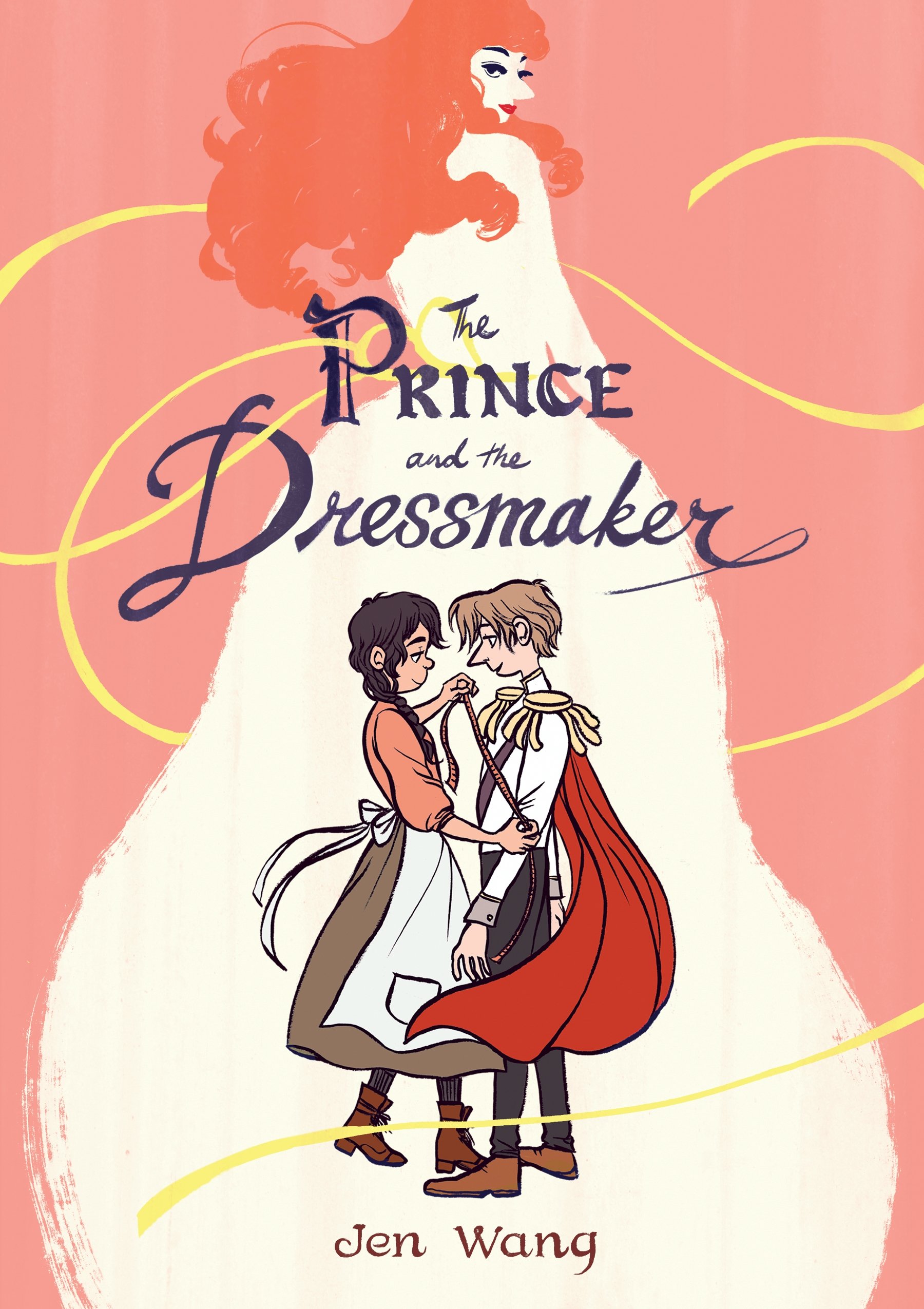
The cover of “The Prince and the Dressmaker”

In The Prince and the Dressmaker, Jen Wang crafts a beautiful fairytale for the modern age. It is an enchanting subversion of gender roles presented in a way where everyone can see themselves in the characters. While not necessarily accurate, the Parisian setting gives the story a strong sense of place. Wang has clearly enjoyed the design element of the story; the dresses are fantastically imagined beautifully rendered on the page.

Although Prince Sebastian is not transgender, the book does address the idea – Sebastian describes the way that sometimes he’s comfortable with being a prince, but other days, he feels more like a princess. Non-binary and gender non-conforming readers may especially relate to this concept. Sebastian does experience some backlash when his secret identity is uncovered, but the story ends showing Sebastian that the people who really matter will love him no matter what.

Overall, this tale would likely appeal to readers with more feminine-coded interests, especially fashion and drag. The novel itself is not fantasy, but its style would draw in fans of the genre. The Prince and the Dressmaker deals with gender more overtly than some of the books discussed here; I would consider it a more fantastical and grown-up version of Jacob’s New Dress. The graphic novel format allows for the fashion and art at the center of the story to truly stand out in a way that shows off Wang’s incredible artistic ability. Ultimately, while this tale of acceptance may not have universal appeal, it will deeply resonate with those that see themselves in the characters.

“Witch Boy” by Molly Knox Ostertag

In Aster’s family, everyone’s role is clearly set in front of them. The secrets of witchcraft are passed on from mother to daughter, while men commune with animal spirits to become shapeshifting warriors. After a disaster from the past, the family is more set in its ways than ever before. It takes Aster, a young teen on the cusp of finding his place as a shapeshifter, to show everyone that there is power in difference.

The cover of “Witch Boy”

Ostertag is no stranger to gender and sexual diversity in media; her work often features queer and gender non-conforming characters. Her partner, artist and writer Noelle Stevenson, is known for her work on the middle grade comic series Lumberjanes and her current work as the showrunner for the animated series She-Ra and the Princesses of Power. In an interview with online comics blog “The Beat,” Ostertag discusses wanting to write “a book for queer kids, for kids who don’t know who they are yet, no matter what their families tell them to think and outside the social norms,” (Molly Ostertag for The Beat). The gender role divergences of not only Aster but also supporting characters feel more relevant than ever in our constantly transforming society.

The graphic novel format suits the story perfectly. Bright colors and vibrant details capture the essence of magic in Ostertag’s universe. The format also serves to make the story more accessible; the novel is recommended for readers from 4th to 7th grade. I would argue that older readers would also have plenty to gain; they may find the story easier to relate to their current lives. The overall message of the novel is a bit heavy-handed, but there is plenty of nuance to find for the observant reader.

I would recommend this story to any fantasy fans looking to subvert traditional fantastical roles. Additionally, Witch Boy is a terrific addition to the modern fantasy genre and feels relevant to non-magical lives as well.

Sources
Ostertag, Molly. “INTERVIEW: Discussing Witch Boy, The Hidden Witch New Release, & More with Molly Knox Ostertag.” The Beat, 8 Oct. 2018, http://www.comicsbeat.com/interview-discussing-witch-boy-the-hidden-witch-new-release-more-with-molly-knox-ostertag/.

“Jacob’s New Dress” by Sarah and Ian Hoffman

“There are all sorts of ways to be a boy.”

    Jacob’s New Dress by Sarah and Ian Hoffman is a book about a young gender non-conforming boy named Jacob. He loves pirates, monkey bars, and playing pretend, but most of all, he loves wearing his favorite clothes – dresses! He often wears dresses as costumes, but after facing bullying from another boy, Christopher, in his class, Jacob wants to wear a dress for real. At first, his parents aren’t sure what to think. Jacob doesn’t give up, however, and makes himself a “dress-thing” from a towel to wear to school. After Christopher tears off his makeshift dress, Jacob’s parents realize how important this is to him and that they need to be empowering their son. Jacob and his mother sew a beautiful purple and white dress together. When Jacob wears it to school the next day, it gives him the confidence to stand up to bullies and be himself.

The cover of “Jacob’s New Dress”

    This book addresses the concept of gender roles from several nuanced angles. First, it takes on the perspective of the child who wants to be themself and be comfortable. It shows the thoughts of parents who want the best for their child and are concerned about their safety. The story also addresses teachers who want to promote acceptance in the classroom while also maintaining peace. Finally, it shows the perspective of a less accepting child who is clearly inheriting their views from their parents. Jacob’s New Dress provides a complete picture of an experience of atypical gender presentation.

    Sarah and Ian Hoffman wrote this story in support of their gender non-conforming son, Sam. Their goal with the book is to promote love and acceptance for all children, regardless of their gender presentation. When I read this book with a group of kindergarteners, they immediately connected with Jacob. I had many interrupting voices to tell me that Christopher was being a bad friend and that anyone can wear any clothes they want. However, this experience did take place in a very liberal private school; I would be interested to see the efficacy of this book in a more conservative environment.

    Jacob’s New Dress is a solid tale about overcoming adversity and being yourself. It also contains strong messages for parents and educators about supporting children in their identities. This story can be used to build empathy in anyone experiencing it.

“Neither” by Airlie Anderson

“Once upon a time, there were two kinds: this and that. When you’re neither, where do you fit in?”

Neither by Airlie Anderson is a colorful tale about fitting in and celebrating differences. In The Land of This and That, creatures are either blue rabbits or yellow birds. This remains the status quo until one day, a green bunny-bird combination is born. The new animal is told that they cannot be both rabbit and bird, so they must be neither. They leave in search of “Somewhere Else” where they might be accepted. After travelling through a beautifully-illustrated landscape, they arrive at “The Land of All.” In this new place, everyone is welcome to play together – even new arrivals from “The Land of This and That” who originally sent our green friend away. The story ends with a gorgeous and intricate spread of citizens of “The Land of All.”

The cover of “Neither”

Neither is not specifically about gender; it applies to a wide variety of identities that children may have. In particular, this book makes a strong allegory for racial and ethnic divides. Its central message is that we do not have to be one thing – we can be neither, both, or something completely different.

The message of this book is somewhat one-dimensional. While it is a message of empowerment, it fails to fully address any intricacies of identity. This story would be appropriate for starting a conversation with elementary schoolers, but needs further discussion to be fully meaningful to a child. Despite this, it is an approachable story to introduce very young children to the idea of identity without diving in too deeply.

Overall, I would recommend this for younger children looking for a simple and beautifully-illustrated tale of acceptance.

“Red: A Crayon’s Story” by Michael Hall

Red: A Crayon’s Story by Michael Hall follows the journey of a crayon who just can’t seem to meet expectations. As young readers are quick to notice, the titular crayon has a red wrapper but a blue body. The other crayons only seem to see his label, however. The book follows Red as all the other crayons and school supplies try to help him do a better job at “being Red.” Nothing works until a new crayon asks Red to draw her a blue ocean for her boat. He objects at first, but she encourages him to “just try.” He draws a beautiful ocean and proudly exclaims, “I’m blue!” After that, every crayon celebrates him for who he is and encourages him to continue exploring who he is.

The cover of “Red: A Crayon’s Story”

Hall says that the book is inspired by his struggles with dyslexia and the tendency of teachers to not see past that label. The story rings true for anyone who finds themselves labeled in a way that might not suit them. For transgender and gender non-conforming readers, the story feels very literal. They were given a label at the “factory” that didn’t line up with how they truly are.

The book also speaks to the idea of well-meaning but misguided supporters. In the story, Red’s friends and family all lovingly try to help him be better at being red. Though they just want to help, what Red actually needs is someone to see past his label and change his perspective entirely.

When I shared this story with a class of first graders, they were immediately in tune with the message. The book made a good vehicle to talk about my own experience as a transgender person in an appropriate and approachable manner. We also talked about times when our outside didn’t match our inside, and one student brought up the idea of pretending to be happy when you’re actually in a bad mood.

I would recommend this book to anyone looking to explore or explain the basic idea of being transgender. The story clearly conveys the idea of external versus internal perceptions. Readers are quick to empathize with Red’s struggles and the book provides a strong base for discussions around any kind of label.

“Not Quite Narwhal” by Jessie Sima

In Jessie Sima’s Not Quite Narwhal, there’s something a little different about a “narwhal” named Kelp. He doesn’t look much like all his friends and he can’t swim nearly as fast. One day, when a current sweeps him away, he finds himself close to land. In the distance, he spots a creature – a “land narwhal” – that looks just like him! Kelp emerges from the water, determined to find this new creature. He stumbles upon the home of the unicorns, who immediately realize that he is in fact one of them. Although Kelp loves his time learning from the unicorns, he realizes that he misses his friends in the sea. He travels back home to share his exciting news, and his narwhal friends reveal that they knew all along. They tell Kelp that they love him no matter who he is. The story ends with narwhals and unicorns playing together with Kelp bridging their two worlds.

The cover of “Not Quite Narwhal

Sima dedicates her story to anyone who has ever felt like they don’t fit in. The sweet message of the book resonates with all readers, regardless of their identity. Much like Neither, it holds a more general message. Not Quite Narwhal would make a good story to support a transgender or gender non-conforming child as they see themself in the protagonist. The book’s adorable art and bright aesthetic draws in all audiences.    

Overall, Not Quite Narwhal invokes a slightly more complex concept of identity without explicitly exploring any one viewpoint. The story is appropriate for younger audiences looking to relate strongly with a protagonist, but does not necessarily directly relate to a transgender experience.